Life in Bedford During the Second World War
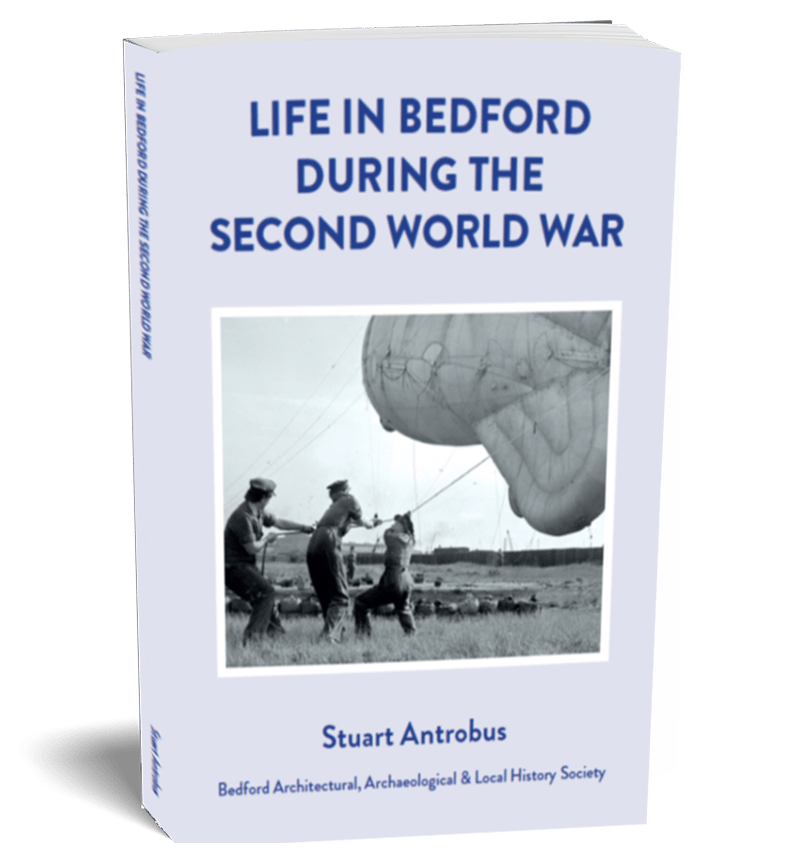
Bedford historian and Bedford Architectural, Archaeological and Local History Society (BAALHS) Committee member Stuart Antrobus has written a new, well-illustrated local history Life in Bedford during the Second World War, published by BAALHS. A second updated edition is now on sale.
This large-format paperback tells the story of how Bedfordians’ lives were affected by the dramatic upheaval of war between 1939 and 1945. Peppered with the voices and personal experiences of men, women and children who lived through this turbulent period, it captures the life-changing ways in which, while the armed forces fought around the world, people on the Home Front fought their own domestic war locally. The book is illustrated with over 80 photographs, some for the first time.
Evacuation, air raid precautions, conscription, rationing of scarce resources, volunteering, fund-raising, ‘digging for victory’ on allotments and recycling were all activities which became an everyday part of Bedfordians’ lives. Women’s roles changed as they took the place of men in vital industries or supported them in the armed forces. New words and phrases demonstrated the changed wartime world – blackout, sirens, gas masks, ‘all clear’, barrage balloons, ‘phoney war’, ‘make do and mend’, ‘is your journey really necessary?’, identity cards, ration books, GIs, ‘blitz’, ‘black market’, ‘Lord Haw-Haw’, the Home Guard and expressions such as ‘don’t you know there’s a war on?’.
Stuart outlines the unique impact on Bedford’s life of the presence of BBC radio’s music and religious affairs departments which brought national orchestras and leading musicians to the town, and the Daily Service broadcasts to the nation from St Paul’s Church, Bedford. Similarly, the friendly invasion of thousands of young American servicemen to the airfields of north Bedfordshire brought a new vitality to the lives of Bedfordians and villagers.
Local History News
“Life in Bedford During the Second World War” received an outstanding, positive, full-page review in the Winter issue of the national Local History News. Heather Falvey concluded:
“The text is a model for anyone wanting to research and write about their own town in the Second World War.”